RCD-036 Amino acids, amines & metabolites
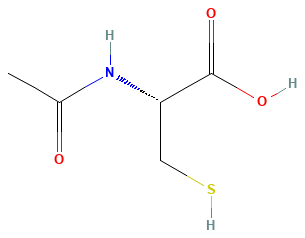
N-Acetylcysteine
A cysteine donor that restores glutathione. It is the standard antidote for paracetamol overdose and, with glycine, has been tested in small trials in older adults.
Compound data
Identifiers
- IUPAC name
- (2R)-2-acetamido-3-sulfanylpropanoic acid
- Synonyms
- NAC, Acetylcysteine, N-Acetyl-L-cysteine
- InChIKey
- PWKSKIMOESPYIA-BYPYZUCNSA-N
- SMILES
- CC(=O)N[C@@H](CS)C(=O)O
Properties
- Formula
- C5H9NO3S
- Molecular weight
- 163.20 g/mol
- Monoisotopic mass
- 163.03031432 Da
- XLogP3
- 0.4
- Polar surface area
- 67.4 Ų
- H-bond donors / acceptors
- 3 / 4
- Rotatable bonds
- 3
- Heavy atoms
- 10
- Formal charge
- 0
Computed by PubChem from the structure. About these values
Classification
- Mechanisms studied
- Origin
- Synthetic acetylated form of the amino acid cysteine
- Status
- Approved medicine
- Last reviewed
This record summarises chemistry and published research. It gives no doses, protocols or sources, and it is not a recommendation to use this compound.
Overview
N-Acetylcysteine is cysteine with an acetyl group on its amino nitrogen, which makes it more stable than free cysteine. Cysteine is the limiting amino acid for making glutathione, the main intracellular thiol antioxidant, so NAC is used to replenish glutathione (Atkuri et al., 2007).
Mechanism
NAC is deacetylated to cysteine, which supports glutathione synthesis. Its free thiol can also reduce disulfide bonds, which is how it thins mucus, and it releases hydrogen sulfide and sulfane sulfur species that may explain some of its antioxidant effects.
Research history
NAC was introduced as a mucolytic in the 1960s. Prescott and colleagues established intravenous NAC as the treatment of choice for paracetamol poisoning in 1979, where it replenishes the glutathione that detoxifies the drug’s reactive metabolite (Prescott et al., 1979).
Preclinical literature
Animal studies of NAC in aging are mixed; it extended lifespan in some invertebrate and mouse studies and not in others, and antioxidants can blunt beneficial adaptive responses to exercise.
Human research & status
In a small randomised trial in older adults, combined glycine and NAC (GlyNAC) for sixteen weeks corrected glutathione deficiency and improved several markers of oxidative stress, mitochondrial function, inflammation and strength compared with placebo (Kumar et al., 2021). Larger independent trials are needed.
References
- Atkuri KR, Mantovani JJ, Herzenberg LA, et al. N-Acetylcysteine--a safe antidote for cysteine/glutathione deficiency. Curr Opin Pharmacol. 2007;7(4):355-9. DOI PubMed
- Prescott LF, Illingworth RN, Critchley JA, et al. Intravenous N-acetylcystine: the treatment of choice for paracetamol poisoning. Br Med J. 1979;2(6198):1097-100. DOI PubMed
- Kumar P, Liu C, Hsu JW, et al. Glycine and N-acetylcysteine (GlyNAC) supplementation in older adults improves glutathione deficiency, oxidative stress, mitochondrial dysfunction, inflammation, insulin resistance, endothelial dysfunction, genotoxicity, muscle strength, and cognition: Results of a pilot clinical trial. Clin Transl Med. 2021;11(3):e372. DOI PubMed