RCD-040 Hormones & steroids
17α-Estradiol
A weakly estrogenic stereoisomer of estradiol that extended lifespan in male mice in several ITP cohorts, with metabolic benefits and without feminisation.
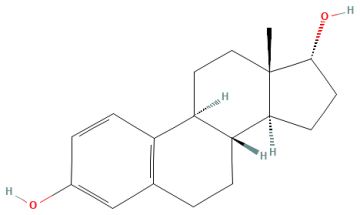
Compound data
Identifiers
- IUPAC name
- (8R,9S,13S,14S,17R)-13-methyl-6,7,8,9,11,12,14,15,16,17-decahydrocyclopenta[a]phenanthrene-3,17-diol
- Synonyms
- Alfatradiol, 17-epi-Estradiol, Epiestradiol
- InChIKey
- VOXZDWNPVJITMN-SFFUCWETSA-N
- SMILES
- C[C@]12CC[C@H]3[C@H]([C@@H]1CC[C@H]2O)CCC4=C3C=CC(=C4)O
Properties
- Formula
- C18H24O2
- Molecular weight
- 272.4 g/mol
- Monoisotopic mass
- 272.177630004 Da
- XLogP3
- 4
- Polar surface area
- 40.5 Ų
- H-bond donors / acceptors
- 2 / 2
- Rotatable bonds
- 0
- Heavy atoms
- 20
- Formal charge
- 0
Computed by PubChem from the structure. About these values
Classification
- Class
- Hormones & steroids
- Mechanisms studied
- Origin
- Natural but minor stereoisomer of the main estrogen 17β-estradiol; produced synthetically
- Status
- Research compound
- Last reviewed
This record summarises chemistry and published research. It gives no doses, protocols or sources, and it is not a recommendation to use this compound.
Overview
17α-Estradiol has the same formula and molecular weight as the main human estrogen, 17β-estradiol, but its 17-hydroxyl group points the other way. This single change makes it a much weaker activator of the classical estrogen receptors, which is why it is described as non-feminising.
Mechanism
Its effects in male mice depend on estrogen receptor α despite its weak activity there, and include reduced food intake and body fat, improved insulin sensitivity and lower inflammation, partly through actions in the hypothalamus (Stout et al., 2017).
Research history
17α-Estradiol was studied for decades as a neuroprotective compound. It entered the Interventions Testing Program because of these properties and its low feminising potential.
Preclinical literature
In the ITP, 17α-estradiol increased median lifespan in male genetically heterogeneous mice, with no effect in females (Harrison et al., 2014). It also extended male lifespan when started at 16 months (Strong et al., 2016). Stout and colleagues found that it reduced age-related metabolic and inflammatory dysfunction in male mice without feminising them (Stout et al., 2017).
Human research & status
There are no human aging studies. Its only human use is as a topical hair-loss treatment in some countries. Translating a male-specific mouse result to people is a recognised challenge.
References
- Harrison DE, Strong R, Allison DB, et al. Acarbose, 17-α-estradiol, and nordihydroguaiaretic acid extend mouse lifespan preferentially in males. Aging Cell. 2014;13(2):273-82. DOI PubMed
- Strong R, Miller RA, Antebi A, et al. Longer lifespan in male mice treated with a weakly estrogenic agonist, an antioxidant, an α-glucosidase inhibitor or a Nrf2-inducer. Aging Cell. 2016;15(5):872-84. DOI PubMed
- Stout MB, Steyn FJ, Jurczak MJ, et al. 17α-Estradiol Alleviates Age-related Metabolic and Inflammatory Dysfunction in Male Mice Without Inducing Feminization. J Gerontol A Biol Sci Med Sci. 2017;72(1):3-15. DOI PubMed