RCD-037 Amino acids, amines & metabolites
Alpha-ketoglutarate
A Krebs-cycle intermediate and co-substrate of many dioxygenases. It extended lifespan in worms by inhibiting ATP synthase and TOR, and compressed late-life morbidity in mice.
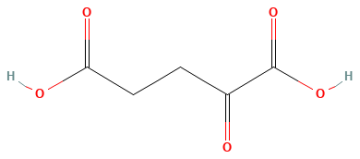
Compound data
Identifiers
- IUPAC name
- 2-oxopentanedioic acid
- Synonyms
- AKG, α-KG, 2-Oxoglutaric acid, 2-Oxoglutarate
- InChIKey
- KPGXRSRHYNQIFN-UHFFFAOYSA-N
- SMILES
- C(CC(=O)O)C(=O)C(=O)O
Properties
- Formula
- C5H6O5
- Molecular weight
- 146.10 g/mol
- Monoisotopic mass
- 146.02152329 Da
- XLogP3
- -0.9
- Polar surface area
- 91.7 Ų
- H-bond donors / acceptors
- 2 / 5
- Rotatable bonds
- 4
- Heavy atoms
- 10
- Formal charge
- 0
Computed by PubChem from the structure. About these values
Classification
- Mechanisms studied
- Origin
- Krebs-cycle intermediate made in every cell
- Status
- Food or supplement
- Last reviewed
This record summarises chemistry and published research. It gives no doses, protocols or sources, and it is not a recommendation to use this compound.
Overview
Alpha-ketoglutarate is a five-carbon dicarboxylic acid that links the Krebs cycle to nitrogen metabolism through glutamate. It is also the co-substrate of the 2-oxoglutarate-dependent dioxygenases, a family that includes the TET DNA demethylases, Jumonji histone demethylases and the prolyl hydroxylases that make collagen and regulate HIF.
Mechanism
In C. elegans, Chin and colleagues found that AKG binds and inhibits the β subunit of ATP synthase, lowering ATP and reducing TOR signalling; its lifespan effect depended on both targets (Chin et al., 2014). Its dioxygenase role means it can also influence DNA and histone methylation and collagen synthesis.
Research history
AKG has been known as a Krebs-cycle intermediate since the cycle was described in 1937. Its study as a longevity molecule began with the 2014 worm study.
Preclinical literature
In C57BL/6 mice, a calcium salt of AKG given from middle age extended lifespan and reduced frailty, changes associated with lower levels of systemic inflammatory cytokines (Asadi Shahmirzadi et al., 2020). It has not been tested in the ITP.
Human research & status
Placebo-controlled human trials of AKG for aging outcomes are under way; published human data are limited.
References
- Chin RM, Fu X, Pai MY, et al. The metabolite α-ketoglutarate extends lifespan by inhibiting ATP synthase and TOR. Nature. 2014;510(7505):397-401. DOI PubMed
- Asadi Shahmirzadi A, Edgar D, Liao CY, et al. Alpha-Ketoglutarate, an Endogenous Metabolite, Extends Lifespan and Compresses Morbidity in Aging Mice. Cell Metab. 2020;32(3):447-456.e6. DOI PubMed